
We investigate how terrestrial biogeochemical cycles respond to global change factors, focusing on the exchange of elements between soils, plants, and the atmosphere. Our research integrates multiple disciplines, including ecosystem ecology, biogeochemistry, and microbial ecology.
How do changing precipitation regimes affect soil N trace gas emissions?

Field scale variation in soil nitrous oxide emissions
Precipitation stimulates emissions of nitrous oxide (N2O; a strong greenhouse gas) from agricultural soils, which are the largest contributor to atmospheric N2O. Denitrification-derived N2O emissions should be highest in topographic depressions where water and N accumulate. However, consistent anoxic conditions may also favor microorganisms that reduce N2O to inert nitrogen gas (N2), limiting net N2O emissions. We used novel 15N-N2O pool dilution and cDNA sequencing methods to link gross N2O production and reduction rates to microbial community composition across topographic gradients in agricultural fields. This work advanced our understanding of how microbial community composition controls ecosystem process rates.
Dry soils can support anaerobic microbial processes
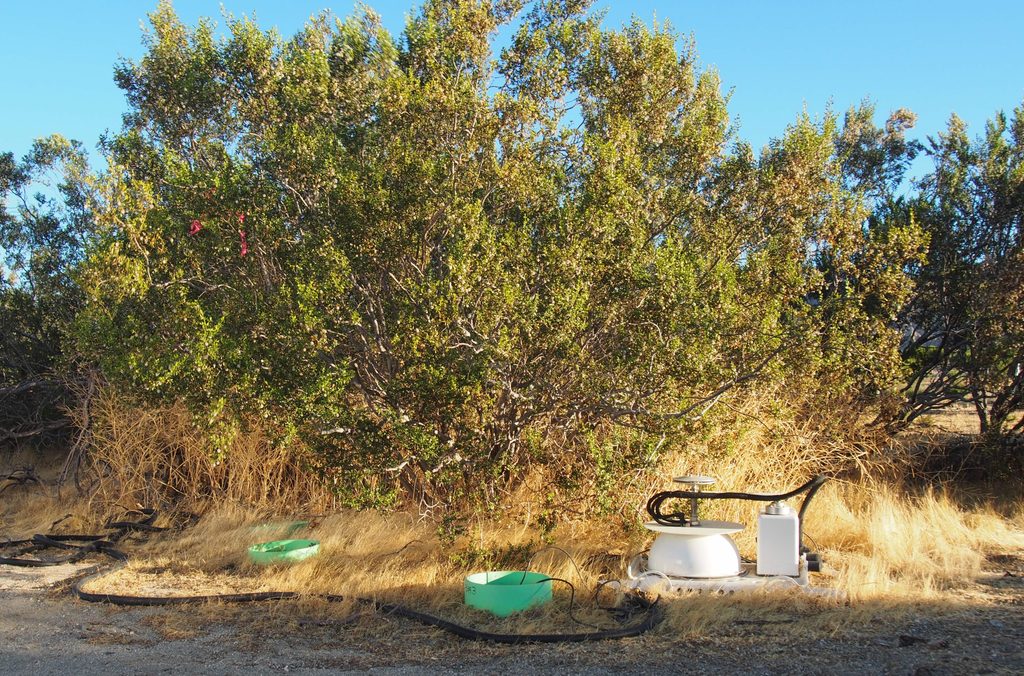
Biogeochemical theory suggests that drylands should produce little N2O because primary productivity remains N-limited and conditions are too dry to support microbial denitrification. Yet, high N trace gas emissions have been observed in N-limited dryland ecosystems, raising questions about the mechanisms producing these gases. To determine which biogeochemical processes emit N2O, we measure the abundance of microbial denitrifiers, soil N trace gas emissions, and N2O isotopes (like site preference, the difference in 15N between the α and β positions of the asymmetric N2O molecule) in dry ecosystems. We have shown that drylands can support anaerobic microbial processes that emit N despite ecosystem water and N limitation.
Effects of drought on ecosystem N loss
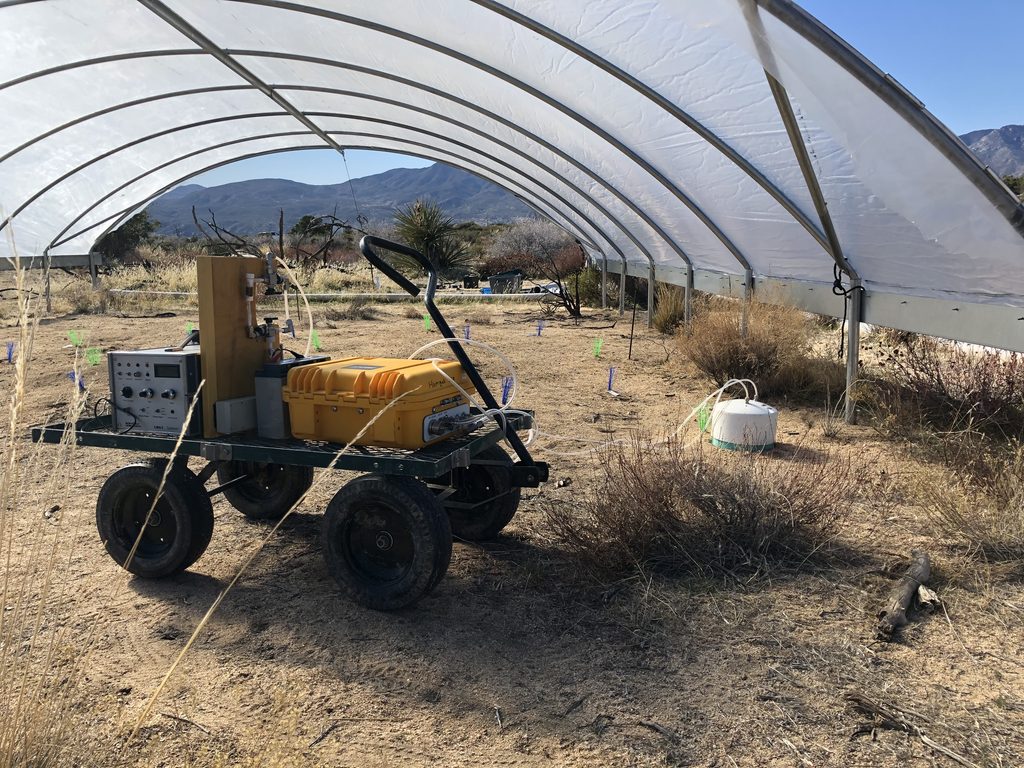
While dryland soils can maintain denitrifier communities that produce N2O, it is not clear how increased drought duration and severity will impact the microbial processes that cycle N. To explore how drought stress impacts microbial N cycling in mesic systems, we implemented drought treatments in a Pinyon-Juniper dryland and measured gross rates of nitrification and N mineralization in addition to N trace gas emissions. Our results suggest that as droughts become more common across many terrestrial ecosystems, microbial trace gas production may decouple from plant N demand, increasing ecosystem N losses.
How does fire affect soil C and N cycling?
Controls on soil C loss after fire
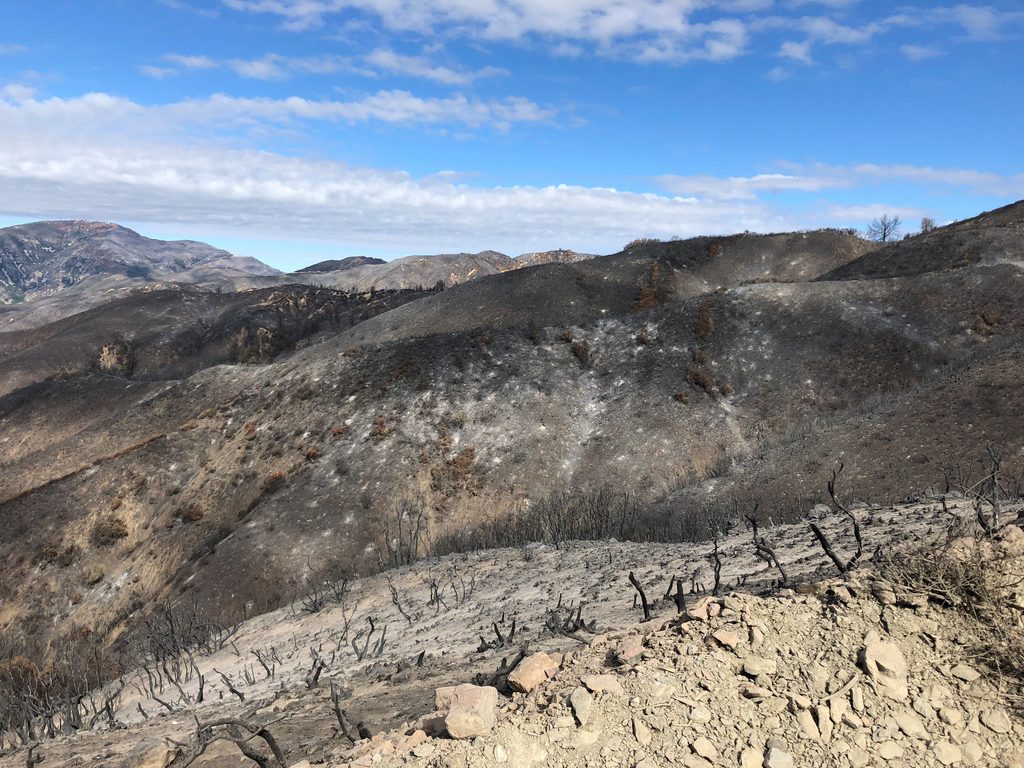
Understanding the relative recovery of microbial decomposition versus plant C inputs in necessary to predict soil C stocks in the face of more intense fire regimes. To this end, we track particulate organic carbon (POC), mineral associated organic carbon (MAOC), carbon isotopic composition, and plant and microbial communities in response to wild and prescribed fires. We have shown that fires immediately combust POC pools, and that rapid recovery of microbial communities can further deplete POC in the months after burning.

Burning can stimulate gaseous N losses
In work lead by graduate student Elizah Stephens, we tracked soil N trace gas emissions and microbial community composition after severe wildfires in southern California. As expected, wildfires increased soil inorganic N concentrations and pH. Changing soil conditions also promoted the proliferation of ammonia oxidizing bacteria (AOB) that stimulated NO and N2O emissions in the years after burning.
Climate impacts of ecological restoration

How does process-based stream restoration affect soil C stocks and GHG emissions?
Riparian soils store disproportionate amounts of carbon (C) compared to upland soils; this C can be lost when streams are degraded. Restoration treatments such as beaver dam analogs (BDAs) and plug and ponds (P&Ps) are being implemented to slow stream flow, raise groundwater levels, and increase overbank flooding, but their affect on soil C dynamics remain unclear. To assess the climate impact of implementing BDAs and P&Ps, we measure soil C stocks and C persistence in degraded and restored riparian soils. Together, our results show that restored riparian soils can contribute to climate change mitigation when they increase soil moisture to slow microbial decomposition.